Predictive Maintenance in Oil and Gas: A Pilot-to-Scale Playbook
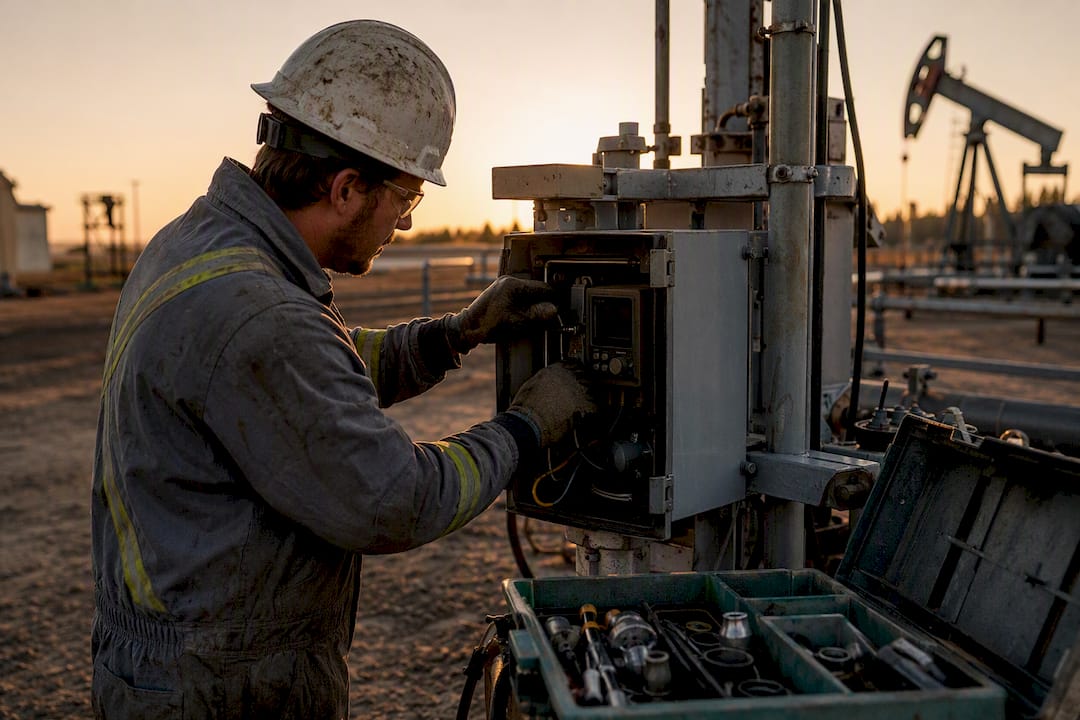
Predictive maintenance cuts unplanned downtime and turns sensor alerts into CMMS work orders, so technicians fix the right asset before it fails rather than after. A five-year deployment across 12 FPSOs delivered $18 million in avoided losses, and a digital-twin rollout across more than 100 drilling rigs cut equipment-related downtime by over 75%. Industry benchmarks put typical results at roughly 50% fewer unplanned outages and 30 to 40% lower maintenance costs once a program matures, based on DOE and industry pilot summaries.
The recommended first move is narrow, not broad.
- Pick one critical rotating asset (an ESP, compressor, or turbine) with a known failure history
- Run a 3 to 6 month pilot against a documented success threshold
- Validate against your existing CMMS records before touching a second asset
Pilot ROI often lands fastest on rotating equipment, where vibration and current signals are already well understood and false starts are cheaper to diagnose.
Key Takeaways
Predictive maintenance works in oil and gas because it converts sensor data into a scheduled work order before failure, not after, and the ROI depends on how tightly that handoff is integrated with your CMMS.
| Point | Details |
|---|---|
| Start narrow | Pilot one to three critical rotating assets for 3 to 6 months before scaling fleet-wide. |
| Define success upfront | Set true-positive rate, lead time, closure rate, and dollar avoidance targets before collecting data. |
| Fix data gaps first | Audit timestamps and fault labeling; inconsistent labels are the top cause of pilot underperformance. |
| Automate the handoff | Route true-positive alerts directly into CMMS work orders through API integration, not manual entry. |
| Close the loop with WellsManager | Its Field Log and AI connector turn validated alerts into logged field work and investor-visible cost data. |
Table of Contents
- What Is Predictive Maintenance in Oil and Gas Operations?
- Which Assets Deliver the Fastest Predictive Maintenance ROI?
- How Do You Build a Predictive Maintenance Pilot That Scales?
- What Systems Do You Need to Integrate for Predictive Maintenance?
- What KPIs Prove Predictive Maintenance Is Working?
- What Are the Biggest Barriers to Predictive Maintenance Adoption?
- How Does WellsManager Turn Alerts Into Executed Field Work?
- Why Pilot Design Matters More Than Model Sophistication
- Get Started With WellsManager for Predictive Maintenance Follow-Through
- Sources
- FAQ
What Is Predictive Maintenance in Oil and Gas Operations?
Predictive maintenance in oil and gas uses sensor data, historical failure patterns, and statistical or machine learning models to estimate when a piece of equipment is likely to fail, so maintenance teams can intervene before an unplanned shutdown. It’s distinct from preventive maintenance, which services equipment on a fixed calendar regardless of actual condition, and from reactive maintenance, which waits for a failure. Reliability engineers sometimes call the underlying discipline condition-based maintenance or, more formally, condition monitoring, and reference ISO 14224 for how failure data should be classified and shared across the industry.
The mechanics are straightforward once you separate the pieces. Vibration sensors, temperature probes, pressure transducers, current clamps, and acoustic monitors feed continuous readings into a data pipeline. Edge devices on the wellsite or platform do a first pass, filtering noise and flagging obvious deviations, because satellite or cellular bandwidth offshore and in remote basins can’t handle raw high-frequency vibration data at scale. Cloud analytics then run the heavier models: Bi-LSTM networks are a common choice for remaining useful life (RUL) estimation, trained on historical run-to-failure data across the fleet.
- Thresholding flags simple limit breaches (temperature over X, vibration over Y) and works well for a first pass.
- Anomaly detection catches subtler drift from a normal operating baseline without needing labeled failure data.
- Supervised failure-mode models classify which specific fault is developing, once you have enough historical fault examples.
- RUL estimation predicts a failure window, not just a binary alert, which is what lets planners schedule work instead of scrambling.
An alert alone changes nothing. It has to route to a triage step, generate a CMMS work order with the right parts and skill assignment, and reach the field crew that actually executes it.
Pro Tip: Don’t chase model sophistication before you’ve automated the alert-to-work-order handoff. A simple threshold model with instant CMMS routing beats a sophisticated RUL model that still requires someone to manually retype an alert into a ticket.
Which Assets Deliver the Fastest Predictive Maintenance ROI?
Rotating equipment tops the list for a reason: failure modes are well documented, and vibration or current signals give early, reliable warning, according to implementation guides for the sector. Start where the physics is understood before moving to harder problems like pipeline integrity or drilling dynamics.
- Electric submersible pumps (ESPs) and downhole pumps: monitor motor current, winding temperature, and vibration signature. Recent research using physics-informed, multi-modal transformer models on more than 58,000 multivariate time-series samples shows meaningfully better RUL estimates than single-sensor approaches, because ESP failures rarely announce themselves through one signal alone.
- Compressors and turbines: bearing temperature and rod-drop monitoring on reciprocating compressors catch valve and packing wear well before a trip event. Vibration spectral analysis remains the primary signal for rotating turbomachinery.
- Pipelines: acoustic and pressure-wave monitoring detect leaks and early corrosion, often days or weeks before a visible failure, though lead time varies heavily with pipe diameter and product.
- Refinery process equipment and heat exchangers: fouling rates and pressure-drop trends give a slower but steady degradation signal, useful for scheduling cleaning cycles instead of reacting to efficiency loss.
- Drilling rigs: constrained by mobile, temporary sensor rigging and harsher vibration environments. A digital-twin program deployed across over 100 rigs cut normalized operating costs by 38%, reaching commercial deployment within three months in that case.
Rotating equipment plus digital twins is where the fastest, best-documented wins show up — start your pilot list there before tackling pipeline or drilling-specific monitoring.
How Do You Build a Predictive Maintenance Pilot That Scales?
A pilot that never scales is worse than no pilot at all. It burns budget and credibility without proving the concept, so the design matters as much as the technology underneath it.
- Select assets by criticality, not convenience. Rank candidates by a combination of OEE impact, historical MTBF, and consequence of failure. Pick one to three assets, no more, for the initial pilot.
- Define success criteria before you collect a single reading. True-positive alert rate, average lead time between alert and actual failure, work-order closure rate, and dollars of avoided downtime are the four numbers that matter. Write down the target for each before the pilot starts, not after.
- Set a realistic pilot window. Three to six months is standard, long enough to capture at least one full operating cycle and, ideally, one real degradation event. Murphy Oil’s Gulf of Mexico program ran 46 predictive models across a 24-month project, starting with manual CMMS entry before automating the workflow through REST APIs.
- Check data sufficiency before trusting any model output. You need enough historical fault examples, at minimum a handful of documented failure events per asset class, plus clean timestamped sensor history, to validate a model against what your CMMS already recorded.
- Set explicit scale triggers. Define in advance what result promotes the pilot to fleet-wide rollout: a minimum true-positive rate, a minimum dollar figure in avoided downtime, or a specific reduction in unplanned outage hours.
Assign clear ownership early. A reliability engineer should own model validation, a maintenance planner should own work-order integration, and someone in data operations should own sensor uptime and data quality. Without that split, a pilot stalls in ambiguity about whose job it is to act on an alert.
Pro Tip: Track closure rate on true-positive alerts specifically. A high alert volume with a low closure rate usually means your CMMS integration is broken, not your model.
What Systems Do You Need to Integrate for Predictive Maintenance?
Before any pilot starts, audit what data you actually have against what the model needs. Most first attempts stall on gaps nobody checked for: missing timestamps, unlabeled maintenance history, or a SCADA feed that samples too infrequently to catch a fast-developing fault.
- Confirm your historian or SCADA/DCS system captures the minimum signal set (vibration, temperature, pressure, current) at a sampling rate that matches the failure mode you’re targeting.
- Decide edge versus cloud deliberately. Edge computing handles noisy, low-connectivity sites like remote wellheads; cloud analytics handle fleet-level model training where you have bandwidth and want cross-asset comparisons.
- Build the integration pattern as historian to analytics engine to API to CMMS, so a validated true-positive alert generates a work order automatically instead of waiting on a human to relay it.
- Automate parts reservation where possible. If the model flags an ESP motor bearing issue, the work order should check inventory and reserve the part in the same step, not three days later when someone remembers.
- Standardize timestamp formats and fault labeling across every data source before training a single model. Inconsistent labeling is the single most common reason a pilot’s model underperforms in the field.
Pro Tip: Run a two-week data audit before committing to a pilot. It’s cheaper than retraining a model on bad labels later.
What KPIs Prove Predictive Maintenance Is Working?
Four metrics carry the business case: unplanned downtime hours saved, MTBF improvement, OEE gains, and maintenance cost per unit of production. Present all four together, because a model that improves MTBF but doesn’t reduce cost per barrel won’t survive a budget review.
| KPI | What It Tells You |
|---|---|
| Unplanned downtime hours saved | Direct measure of avoided production loss, tracked against pilot baseline |
| MTBF improvement | Whether failure frequency is genuinely dropping, not just being detected earlier |
| OEE gain | Combined effect of availability, performance, and quality improvements |
| Maintenance cost per unit | Whether cost avoidance outweighs the sensor and analytics investment |
Industry summaries put typical mature-program results at roughly 50% fewer unplanned outages and 30 to 40% lower maintenance costs. Treat those as directional ranges, not guarantees, and calculate your own baseline before promising a number to finance.
Present results as a before-and-after on the four KPIs above, tied to a dollar figure, since executive stakeholders respond to avoided cost far more than to model accuracy metrics.
What Are the Biggest Barriers to Predictive Maintenance Adoption?
Sparse fault data is the most common technical barrier. Most assets simply haven’t failed often enough to give a model rich training examples, so bootstrap with FMEA or FMECA analysis, physics-informed constraints, and transfer learning from similar assets elsewhere in the fleet.
- Reduce false positives by building failure-mode-specific models instead of one general anomaly detector, and keep a human triage step in the loop rather than auto-closing alerts.
- Budget real time for change management. Field technicians who’ve spent years trusting their own judgment need a proof-of-value period before they trust a model’s alert over their own read on an asset.
- Maintenance commonly runs 15 to 20% of total operating expense at many facilities, which is the financial argument for pushing through early resistance.
- Confirm sensor and connectivity hardware carries the right hazardous-area certifications before deployment; retrofitting a wellsite after a failed inspection costs more than specifying correctly the first time.
How Does WellsManager Turn Alerts Into Executed Field Work?
An alert that never reaches a technician’s hands is a wasted alert. That’s the gap Wellsmanager closes for independent operators: it functions as an operations hub where sensor-driven maintenance flags, once validated, become field-executable work orders inside the same system that already tracks costs and compliance.
- The mobile Field Log lets technicians log maintenance activity and costs against a specific well in real time, closing the loop between a predictive alert and the actual work performed.
- An AI connector lets reliability engineers ask operational questions in plain language, speeding up root-cause analysis instead of digging through spreadsheets after every alert.
- Maintenance costs tied to a PdM-flagged repair flow directly into the per-well lease operating statement, so investors see the financial impact of avoided downtime without a separate reporting step.
Programs that automate the alert-to-work-order handoff, rather than routing it manually, consistently show higher closure rates on true-positive alerts — the metric that separates a pilot with real ROI from one that just generates noise.
Why Pilot Design Matters More Than Model Sophistication
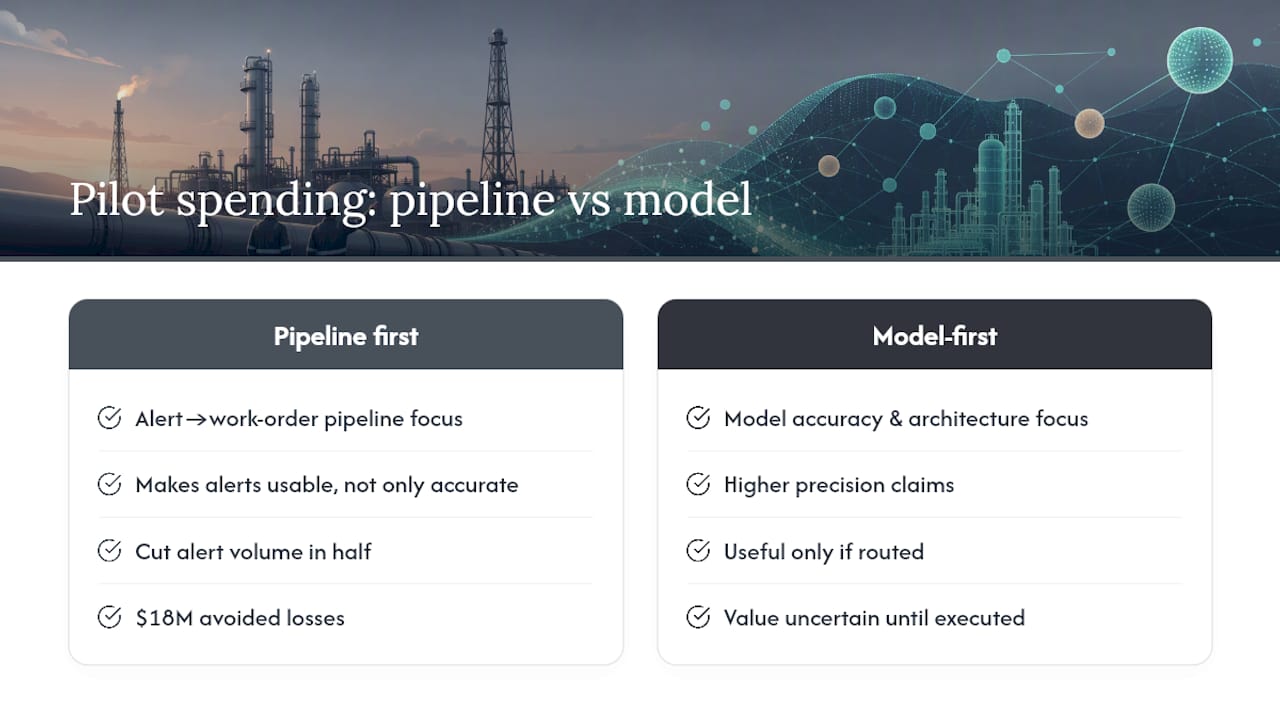
The industry’s conventional advice fixates on model accuracy: which algorithm, which architecture, which vendor’s machine learning claims the highest precision. That’s the wrong first question. The 12-FPSO study that delivered $18 million in avoided losses got there largely by cutting alert volume in half through better contextualization, not by building a fundamentally smarter model. The value came from making alerts usable, not just accurate.
Where most programs actually fail is the handoff between an alert and a technician standing at the wellhead with the right part in hand. Murphy Oil’s own project needed two years partly because the CMMS integration started manual and had to evolve into an automated workflow. That’s an operations problem, not a data science problem, and it’s usually underfunded relative to the modeling budget.
If you’re choosing where to spend your first pilot dollar, spend it on the alert-to-work-order pipeline before you spend it on a more elaborate model. A mediocre model with instant, reliable routing to field execution beats a brilliant model that still requires someone to manually create a ticket.
Get Started With WellsManager for Predictive Maintenance Follow-Through
Sensor platforms and analytics vendors can tell you an ESP bearing is degrading. They can’t log the repair, reserve the part, update the lease operating statement, or show an investor what that avoided failure was worth. Wellsmanager is built for the part of predictive maintenance that most PdM tools skip entirely: turning a validated alert into a logged field job, a tracked cost, and a transparent number in an investor’s distribution statement.
Independent operators use its mobile Field Log to capture maintenance work in real time and its AI connector to ask plain-language questions about operational history instead of digging through spreadsheets. If you’re running a pilot and need the last mile between “the model flagged it” and “the work got done and the cost got recorded,” request access to WellsManager and see how it fits your current CMMS workflow.
Sources
- Bridging the Gap of Smart Asset Management: Key Insights and Challenges from a 5-Year Journey Across 12 FPSOs
- Framework for AI- and ML-Based Predictive Maintenance for Offshore Rotating Equipment
- Scalable digital twin solution for drilling equipment reliability (deployment case study)
FAQ
What Are Examples of Predictive Maintenance in Oil and Gas?
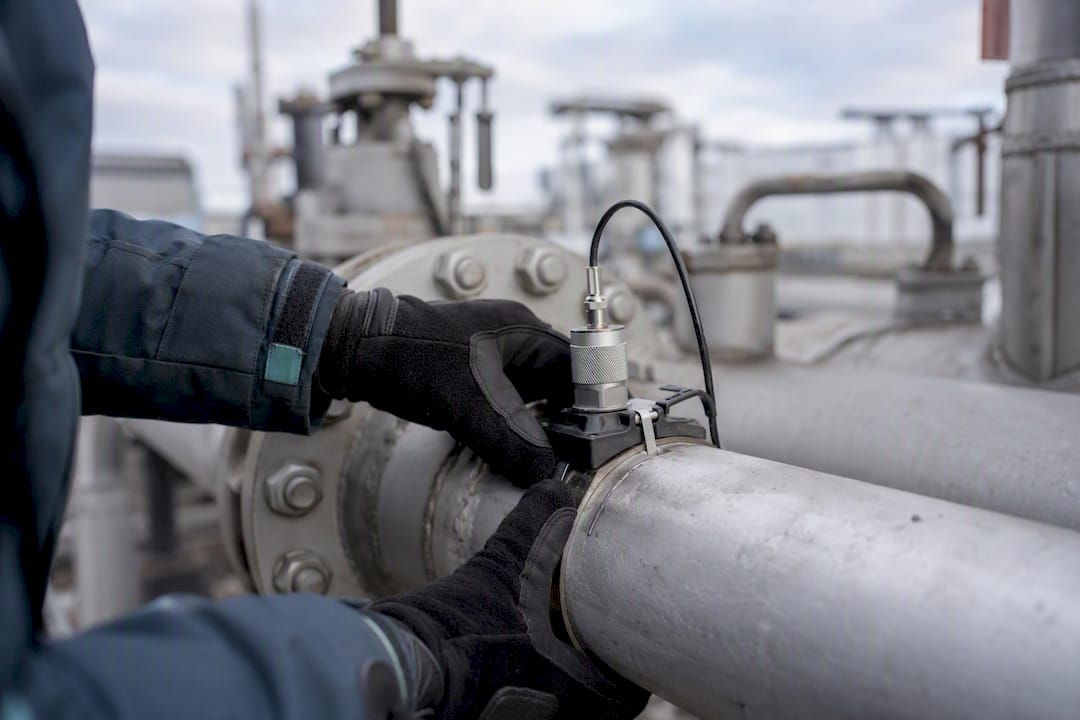
Common examples include vibration monitoring on compressors and turbines, motor current analysis on ESPs, acoustic leak detection on pipelines, and bearing temperature tracking on rotating equipment, all feeding models that estimate remaining useful life before failure occurs.
What Are the Three Types of Predictive Maintenance?
The three common approaches are threshold-based monitoring (flagging limit breaches), anomaly detection (spotting deviation from normal baseline behavior), and model-based prognostics such as RUL estimation, which predicts a failure window rather than a single alert point.
What Are the Three P’s of Maintenance?
Definitions vary across the industry, but a common framing refers to Predictive, Preventive, and Proactive maintenance, distinguishing condition-based intervention from fixed-schedule servicing and from upstream design or process fixes that prevent failure modes altogether.
What Elements Belong in a Predictive Maintenance Program?
A working program needs reliable sensor data, a clean data pipeline, a validated analytics model, defined alert thresholds, an integrated CMMS workflow, trained field staff, and measurable KPIs like MTBF and downtime hours saved, tracked from pilot through fleet scale.
How Long Should a Predictive Maintenance Pilot Run?
Most oil and gas pilots run three to six months, long enough to capture a full operating cycle and validate model output against real CMMS history before deciding whether to scale to additional assets.