3 Tasks to Lock LOE Categories for Midland Odessa Operators
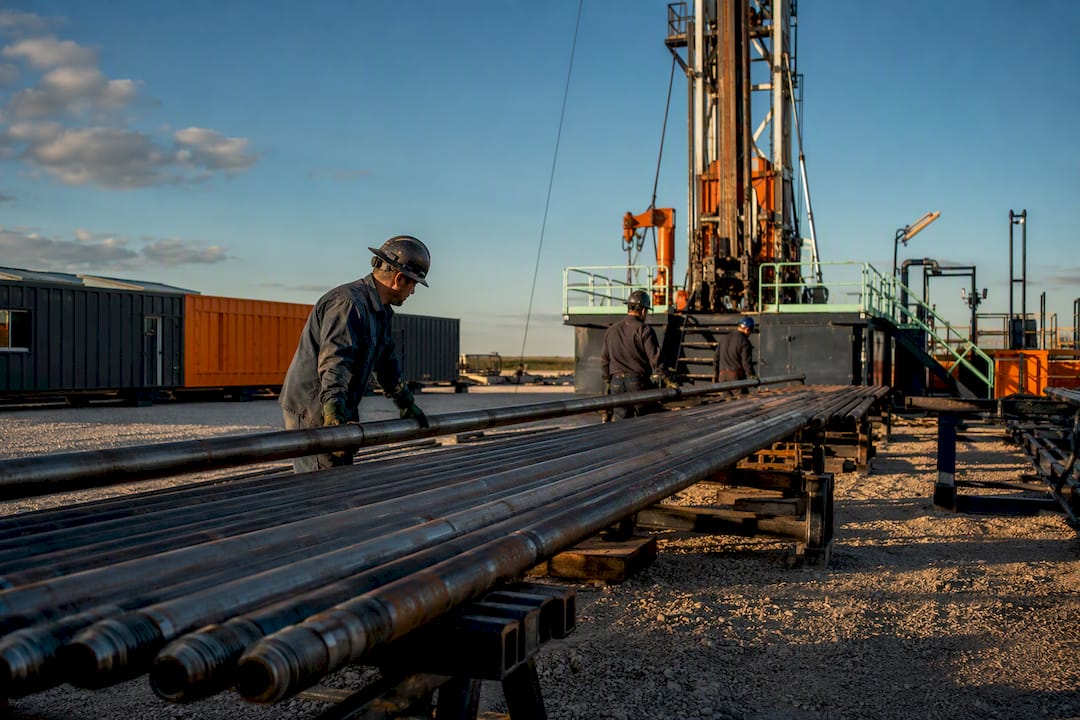
LOE categories are the standard cost lines you use to classify recurring well-level expenses in a well cost book: field labor, power and fuel, chemicals, water handling, routine repairs, and well servicing. The rule that separates LOE from CapEx is simple: if the spend sustains current production, it’s LOE; if it adds capacity or materially extends the well’s life, it belongs on the balance sheet as capital.
TL;DR:
- Only routine repairs and workovers that restore a well to its previous capacity are classified as LOE, while any work adding capacity or extending production life qualifies as CapEx.
- Code invoices immediately to the correct well and category, avoiding batch coding at month-end, to prevent misclassification and improve accuracy.
- Shared costs, such as pumper routes, should be split into fixed and variable portions and allocated proportionally based on production volumes to ensure proper expense attribution.
- Consistent classification and proper documentation, including vendor invoices and scope-of-work details, prevent audit issues and clarify whether work is repair or improvement.
- Accurate timing and continuous updating of well cost books are essential to prevent timing discrepancies that can distort the lease operating statement and investor distributions.
Table of Contents
- What Are the Standard LOE Categories in a Well Cost Book?
- How Do You Decide OpEx vs CapEx for a Well Cost Entry?
- Workover vs. Recompletion: Where’s the Line?
- How Does LOE Flow Into the Lease Operating Statement?
- Pedro’s Operator Perspective: What Worked in Midland-Odesso
- Get Field Tickets, Cost Books, and Investor Checks Off Your Desk
- Sources
- FAQ
What Are the Standard LOE Categories in a Well Cost Book?
Lease operating expense is the recurring cost of keeping a producing well and its surface equipment running. It’s not the cost of drilling, completing, or expanding a well’s capacity. It’s what you spend every month just to keep oil and gas flowing at the rate the reservoir will give you.
Most Permian operators code invoices into these core buckets:
- Field labor — pumpers and lease operators checking wells, adjusting rates, and handling routine field tasks.
- Power and fuel — electricity for pumping units and compressors, plus fuel for engines that don’t run on grid power.
- Chemicals — corrosion inhibitors, paraffin treatments, scale inhibitors, and biocides dosed into the wellbore or flowline.
- Water handling and disposal — trucking to a saltwater disposal well or SWD injection costs at the lease.
- Repairs and routine maintenance — pumping unit repairs, tank patching, flowline leak fixes, valve replacements.
- Well servicing — routine workovers that restore the well to its prior producing condition (rod jobs, tubing replacement, pump changes).
- Short-term equipment rentals and compression — rented compressors, generators, or tanks billed monthly for ongoing operation.
What doesn’t belong in LOE: royalties, production and severance taxes, gathering and processing fees, and anything that qualifies as CapEx. Federal accounting guidance on production versus capitalized costs draws this same line, and public E&P filings report LOE as its own distinct disclosure line separate from taxes and gathering costs. Typical per-well cost ranges and category breakdowns are also documented in industry LOE overviews.
Pro Tip: Code every chemical and water-hauling invoice to a specific well the day it hits your desk. Batch-coding a stack of tickets at month-end is where misclassification creeps in, and it’s the single easiest habit to fix.
How Do You Decide OpEx vs CapEx for a Well Cost Entry?
The test that matters most: does the spend sustain the well at its existing production capacity, or does it add capacity or extend the well’s productive life beyond what it had before the work? Sustain means LOE. Add or extend means CapEx.
Run every borderline invoice through this checklist:
- Outcome — did the well come back producing at roughly the same rate, or did output jump because of new capacity?
- Useful life — did the work add years of life the well wouldn’t otherwise have had, or just keep it running on schedule?
- Cost threshold — many operators set a dollar floor (commonly a few thousand dollars) below which even borderline work gets coded as LOE for practicality.
- Contractor scope — was the crew repairing existing equipment, or installing something that wasn’t there before?
- Asset installation vs. in-kind repair — swapping a worn pump for the same model is a repair; adding a bigger pump to handle higher volumes is an asset addition.
Shared costs need their own math. For pumper routes covering multiple wells, a practical two-step allocation works well: split fixed route costs (like the pumper’s daily rate) equally across the wells on that route, then allocate variable costs, fuel, and water hauling, pro rata by production volume or barrels hauled from each well. This is the same allocation approach operators use to keep shared-cost splits defensible during a partner audit.
A well-run field ticket system cuts month-end disputes sharply. Requiring a ticket number on every invoice before it posts to the cost book gives operations and accounting a shared reference point, which reduces coding disagreements between the two teams. Journal entries should always reference the ticket or AFE number, not just a vendor invoice, so an auditor can trace a dollar back to the field event that caused it.
Workover vs. Recompletion: Where’s the Line?
The gray zones are where LOE classification actually gets contested, and they show up every month in a Permian cost book.
Workover vs. recompletion. A workover that restores a well to its prior producing zone and rate, say, pulling a worn rod string and running new rods, is LOE. Perforating a new zone or recompleting to access reserves the well wasn’t previously producing is CapEx, because it adds capacity the well didn’t have. A stuck-pump pull-and-reset on a Spraberry well is routine LOE; a re-entry to perforate an uphole Wolfcamp interval is capital work.
Rentals. Renting a compressor for a month while you troubleshoot flowline pressure is LOE. Buying and permanently installing that compressor is CapEx, even if you rented the identical unit for six months first.
Repair vs. improvement. Replacing a corroded section of flowline with the same-diameter pipe is a repair. Upgrading the whole gathering line to a larger diameter to handle more volume is an improvement, and it capitalizes. Keep the vendor’s scope-of-work language and any before/after production data on file. That paperwork is what defends the classification later.
Sign-off matters. Operations should flag anything over your cost threshold or anything that changes well configuration, and finance should confirm the classification before it posts. Retain the field ticket, the vendor invoice, and any AFE tied to the job in one file per well.
Pro Tip: When a workover crew’s scope changes mid-job, get it in writing. A “simple rod job” that turns into a “recompletion attempt” needs a new work order, not a footnote on the old one.
How Does LOE Flow Into the Lease Operating Statement?
Your well cost book feeds the LOS directly. Each LOE category, labor, power, chemicals, water handling, repairs, and servicing, rolls up into its own line, while production taxes, severance tax, and gathering and processing fees sit in separate rows because they’re calculated differently and often at different rates by county. A full explanation of how LOS lines connect to per-well costs is worth reading if you’re building your first cost book from scratch.
Timing matters more than most operators expect. An invoice coded in the wrong month understates one period’s LOE and overstates the next, which throws off the per-well net revenue investors see on their checks that month.
Three controls keep this clean:
- Field work tickets logged the same day, not reconstructed from memory at month-end.
- Invoices coded to a well and a category before they sit in an unclassified bucket.
- A well cost book updated continuously, not rebuilt from scratch every close.
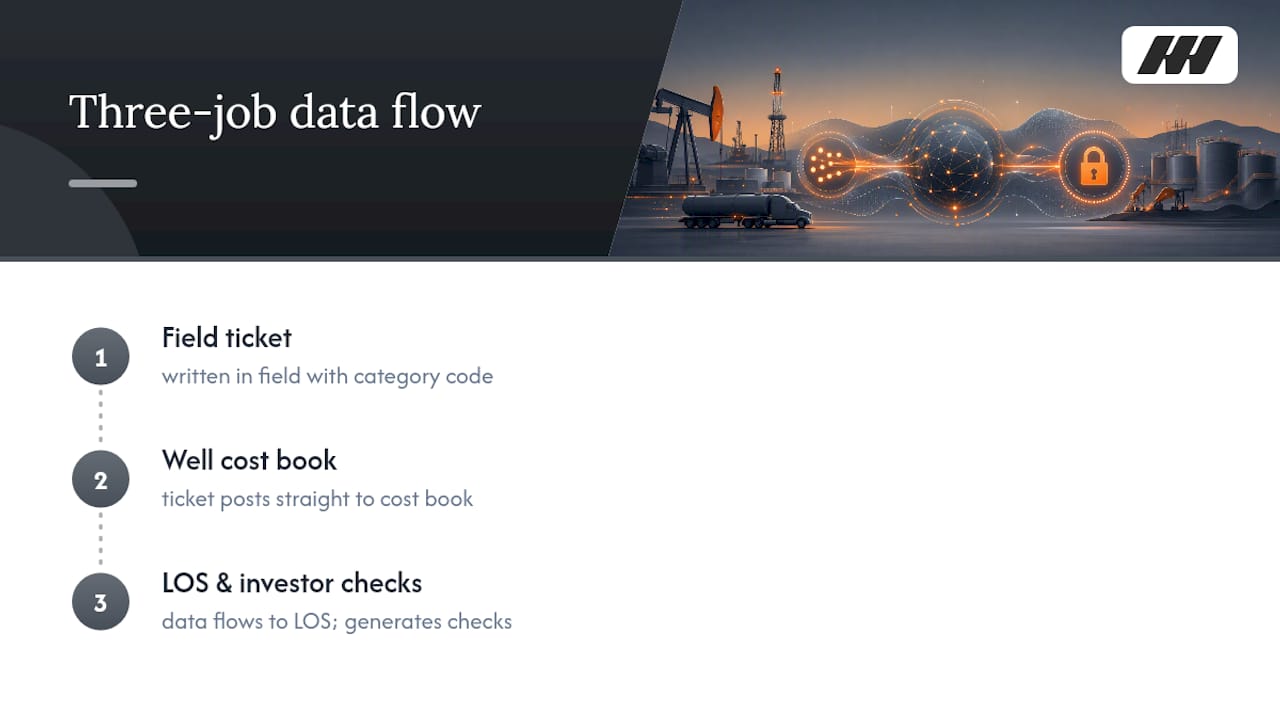
The workflow that works: ticket gets written in the field, it posts to the well cost book with a category code, the well cost book rolls into the LOS, and the LOS drives the investor check. Break any link in that chain and you’re doing manual reconciliation at 11pm the night before checks go out.
Pedro’s Operator Perspective: What Worked in Midland-Odesso
I’ve seen two patterns repeat across Permian operators. One coded a compressor rental as CapEx because “it felt like an asset,” which understated LOE for a year and confused the per-well P&L when the rental ended. Another treated every workover as LOE by default, including one that was really a recompletion, and it took a partner audit to catch it.
The fix in both cases was the same: tie every invoice to a well and a ticket number before it posts, no exceptions. Consistency beats cleverness here. For deeper examples on allocation and LOS construction, the cost allocation guide and lease operating statement breakdown are worth your time.
— Pedro
Get Field Tickets, Cost Books, and Investor Checks Off Your Desk
Wellsmanager solves the exact three jobs this article covers: field work tickets that replace the notebook and the group text, a well cost book that shows what each well actually spent by category, and investor checks paired with a lease operating statement that don’t require a month-end scramble. A ticket written in the field posts straight to the well cost book with its category code attached, and that same data flows into the LOS that generates investor checks, no rebuilding numbers twice.
If you’re still reconciling invoices against a spreadsheet the week before distributions go out, see how WellsManager handles field tickets, well cost books, and investor checks and request a demo.
Sources
- SEC filing (2025) — segment reporting and LOE disclosure example
- CFR — SEC accounting and disclosure guidance (cost categories)
FAQ
What Is LOE in Oil and Gas Accounting?
LOE is the recurring cost of operating and maintaining a producing well, covering field labor, power, chemicals, water handling, routine repairs, and well servicing. It excludes capital costs, production taxes, and gathering fees.
What Are the Main LOE Categories?
The core categories are field labor, power and fuel, chemicals, water handling and disposal, repairs and routine maintenance, well servicing, and short-term rentals or compression costs.
How Do You Tell LOE Apart From CapEx?
Ask whether the work sustains the well’s existing production or adds new capacity and extends its life. Sustaining work is LOE; capacity-adding work is CapEx.
Is a Workover Always LOE?
No. A workover that restores prior production, like a rod job, is LOE, but one that perforates a new zone or otherwise adds capacity counts as a recompletion and gets capitalized.
Why Does LOE Categorization Matter for Investor Distributions?
Miscoded LOE distorts the per-well P&L on the lease operating statement, which changes the net revenue figure investors see on their checks that period. Tools like WellsManager tie field tickets directly to the well cost book to keep that number accurate.