Data Lineage in Oil and Gas: A Practical Chain of Custody
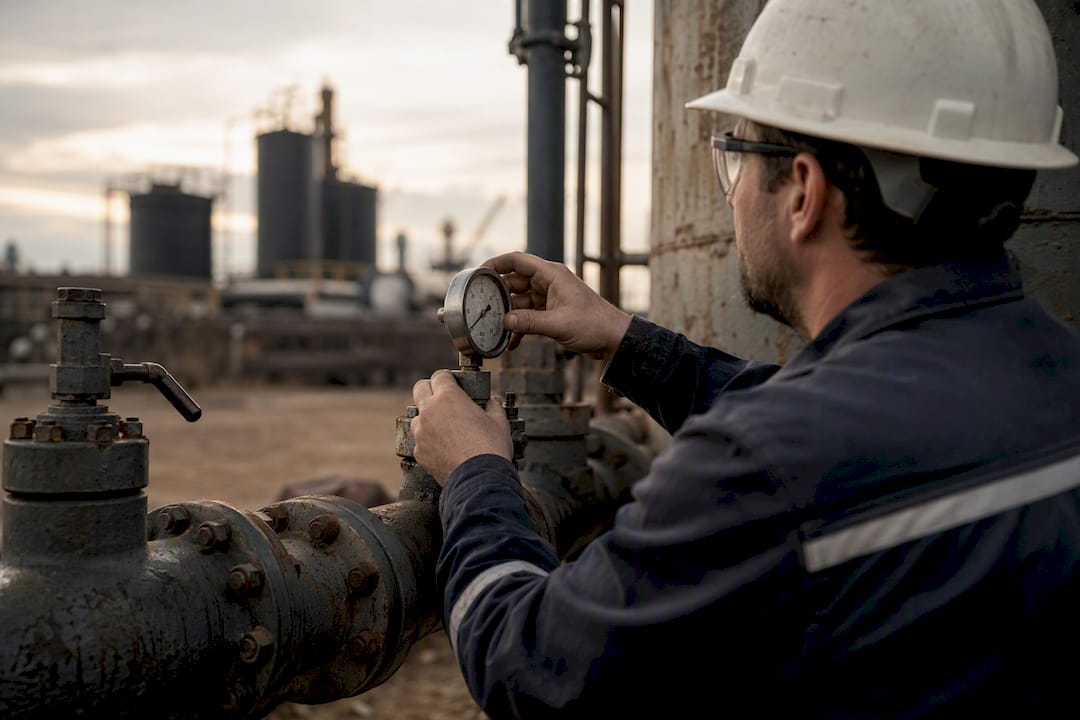
Data lineage is the traceable chain showing where a number originated, what touched it, and how it turned into the figure on your report. For oil and gas operators, that chain is what lets you answer “where did this barrel count come from?” in minutes instead of days, during an audit, a reserves review, or a model validation. Lineage differs from provenance: provenance is the origin point (the meter, the log, the run ticket), while lineage is the full custody trail from that origin through every transformation to the final report.
Three things break without it:
- Audit evidence collapses when a regulator asks for a traceable, verifiable, complete record and you can only produce the final number.
- Month-end reconciliation drags on because nobody can confirm which SCADA read fed which allocation.
- ML models built on production or subsurface data become impossible to reproduce once the training set’s origin is forgotten.
Success looks like this: a data manager can trace any reported figure back to its source system within minutes, not after a week of email threads with field staff.
Key Takeaways
Data lineage works in oil and gas because it turns “where did this number come from” from a multi-day investigation into a query you can answer in minutes.
| Point | Details |
|---|---|
| Lineage differs from provenance | Provenance is the origin point; lineage is the full custody trail through every transformation. |
| Instrument at four key points | Capture lineage at ingest, middleware, ETL/ELT, and feature stores rather than after the fact. |
| Standards reduce friction | ISO EIP and RESQML make subsurface data exchange portable across vendors and project phases. |
| PHMSA raises the stakes | The Mega Rule requires traceable, verifiable, complete records, which functionally means lineage. |
| Wellsmanager builds it in | Field Log entries, well costs, and lease operating statements share one traceable record. |
Table of Contents
- Understanding Data Lineage and Why Oil and Gas Companies Need It
- How Data Lineage Tracking Actually Works
- Where Lineage Matters Most in Upstream and Midstream Operations
- Building a Lineage Program: A Step-by-Step Checklist
- Standards That Make Lineage Portable Across Systems
- Applying Lineage Principles: How Wellsmanager Tracks Every Dollar and Well Event
- What Most Lineage Advice Gets Wrong for Operators
- See How Wellsmanager Handles Lineage for Your Wells
- Sources
- FAQ
Understanding Data Lineage and Why Oil and Gas Companies Need It
Provenance answers “where did this data point come from originally?” Lineage answers “what happened to it on the way to this report?” A single meter reading has provenance the moment it’s captured. It gains lineage as it moves through SCADA, into an ETL job, through unit conversions, and into an allocation report that investors will read.
Picture a gas meter that logs volume every fifteen minutes. That reading travels into a SCADA historian, gets pulled by a nightly ETL batch, gets adjusted for temperature and pressure, and lands in a monthly allocation statement split across working interests. Each hop is a link. Break one link and you have a number nobody can defend.
That’s the missing chain problem: an operator can usually produce the physical equivalent of a run ticket for a barrel of oil, but the digital record behind a reported volume often has no equivalent chain of custody, according to an analysis of provenance metadata for subsurface data. The costs of that gap show up in specific ways:
- Audit findings that flag “unsupported” figures, triggering penalties or re-filings.
- Delayed month-end closes while staff manually reconstruct how a number was calculated.
- Reserve or valuation estimates built on subsurface data nobody can verify, which becomes a real liability during due diligence as explained in the Oil Reserves Data Interpretation Guide for Investors.
Whether a dataset can be trusted “as is” or needs re-verification comes down almost entirely to how complete its lineage metadata is, according to research on subsurface data trustworthiness.
How Data Lineage Tracking Actually Works
Lineage capture splits into two approaches. Prospective lineage instruments your pipelines to record custody as data moves through them in real time. Retrospective lineage reconstructs the trail after the fact by scanning logs, code, and metadata. Prospective capture is more reliable and cheaper to maintain long term. Retrospective scanning is what you fall back on for legacy systems you can’t easily instrument.
You have four practical points to instrument:
- Edge and ingest — where sensor data, field logs, or manual entries first enter a digital system.
- Middleware or request-handling layers — instrument here rather than inside every microservice; it decouples lineage tracking from application logic and cuts developer overhead.
- ETL/ELT jobs — the transformation step where unit conversions, allocations, and joins happen, and where lineage is most often lost.
- Feature stores — for any ML pipeline, the point where raw data becomes a model input.
For storage, graph databases like JanusGraph paired with a CQRS pattern (separating write paths from read/query paths) handle the scale and query load of runtime provenance well, a design validated by ProvLake’s architecture for tracking AI workflow lineage. Every lineage record needs, at minimum: a persistent asset ID, a timestamp, the transformation parameters applied, the user or system responsible, and a version number.
Pro Tip: Don’t try to instrument everything on day one. Pick your highest-risk data flow, usually production allocation or SCADA-to-reporting, and get full lineage working there before expanding.
Where Lineage Matters Most in Upstream and Midstream Operations
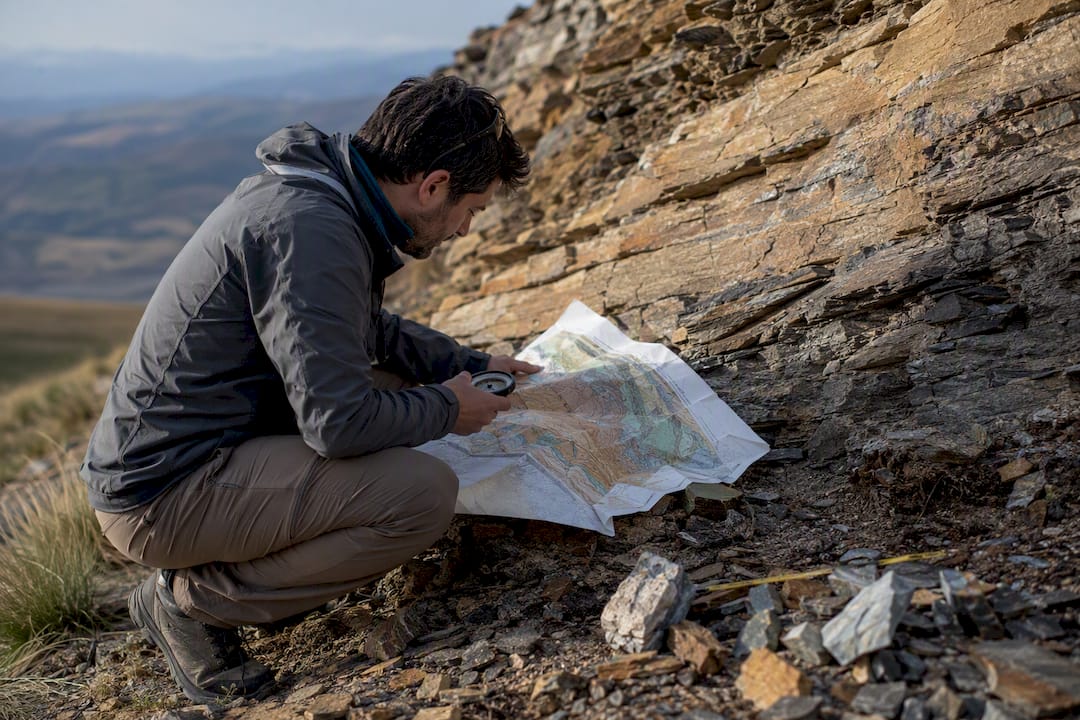
Subsurface modeling depends on knowing exactly which seismic surveys, well logs, and synthetic interpretations fed a given model. Reprocess a seismic dataset without recording that lineage, and the next geologist who touches the model has no way to know if it’s still valid.
ML lifecycle management has the same problem in a newer form. If you can’t trace which training data and feature versions produced a given model, you can’t reproduce it, debug it, or defend it to an auditor. ProvLake was built specifically to solve this for oil and gas ML pipelines, including tasks like well-top picking, by capturing runtime provenance automatically rather than relying on developers to log it manually, per research on provenance-tracked ML workflows.
Production accounting is where lineage gaps get expensive fastest. Allocation tracebacks, reconciling meter reads against run tickets against reported volumes, are routine audit targets.
Operators that build provenance into daily workflows can answer a custody question in minutes. Those that don’t spend days reconstructing it by hand, and sometimes can’t reconstruct it at all.
Regulatory exposure adds urgency. PHMSA’s Mega Rule shifts the burden of proof onto pipeline operators, requiring records that are traceable, verifiable, and complete, known as TVC, according to Cognite’s analysis of Mega Rule compliance. An auditor asking for TVC evidence on a pipeline segment is, functionally, asking for lineage.
Building a Lineage Program: A Step-by-Step Checklist
Start with an inventory, not a tool purchase. You cannot instrument what you haven’t mapped.
- Inventory your data assets and assign persistent IDs. Every well, meter, and report needs an ID that survives system migrations.
- Rank data flows by risk and pick one pilot. Production allocation or SCADA-to-reporting is usually the highest-value starting point.
- Choose a capture strategy. Built-in capture inside pipelines beats retrospective scanning for anything you control; reserve scanning for legacy systems you can’t touch.
- Model your metadata schema before choosing storage. Decide what fields matter (ID, timestamp, transformation, operator, version) before picking a graph database or provenance store.
- Instrument transformations explicitly. Log the actual parameters used in every unit conversion or allocation calculation, not just the fact that one happened.
- Assign stewardship roles and SLAs. Someone owns lineage completeness for each domain, with a defined response time for provenance requests.
- Track three metrics going forward: provenance response time, percentage of critical data flows covered, and how the program performs in a mock audit drill.
Legacy batch-oriented systems often bottleneck at the storage layer once query volume rises. A CQRS pattern, separate read and write instances with replication, keeps provenance queries responsive even when ingestion is heavy, based on architectural guidance from ProvLake’s design. Platform vendors increasingly recommend automating capture wherever possible rather than relying on manual logging, and tying lineage directly into master data management, per Microsoft’s guidance on data governance and MDM.
Pro Tip: Measure provenance response time from week one, even informally. If it takes your team three days to answer “where did this number come from,” that’s your baseline, and the number to watch as you build lineage into the pipeline.
Standards That Make Lineage Portable Across Systems
Two standards do most of the heavy lifting in oil and gas. The Energy Industry Profile, built on ISO 19115-1, defines a metadata structure specifically for tracking origin and lineage of subsurface and analytics data. RESQML handles the domain-specific problem of exchanging subsurface models (grids, wells, seismic interpretations) between vendors without losing the metadata that says where each piece came from.
Neither standard is optional if you work with multiple vendors or plan to sell or merge assets. Adopting ISO EIP and RESQML materially reduces friction when subsurface datasets change hands across project phases or company boundaries, since everyone is reading the same metadata structure instead of reverse-engineering a proprietary format.
For ML pipelines specifically, feature stores need their own version discipline: every model input should carry a version tag tied back to the training data snapshot that produced it. That’s a governance practice, not a formal standard, but it matters just as much for reproducibility.
- ISO EIP standardizes lineage metadata fields for subsurface and analytics data.
- RESQML standardizes subsurface model exchange between vendors and project phases.
- Feature store versioning ties ML model inputs back to a specific training data snapshot.
- Vendor contracts should require EIP-compliant metadata as a condition of data handoff.
Applying Lineage Principles: How Wellsmanager Tracks Every Dollar and Well Event
Wellsmanager builds lineage into the operator workflow itself rather than bolting it on afterward. When a field technician logs a maintenance task or cost through the mobile Field Log, that entry is tied to a specific well, timestamped, and attributed to the user who entered it, the same custody discipline lineage frameworks call for.
That record then flows into vendor invoicing, the lease operating statement, and investor distributions without anyone re-entering data by hand. An operator can trace a reported well expense back to the exact field event that generated it, which is the practical test of good lineage: can you answer where a number came from in minutes?
- Field Log entries create a persistent, timestamped record at the point of capture.
- Costs link directly to the well and vendor that generated them.
- Lease operating statements pull from that same underlying record, not a re-keyed copy.
- Investors see distributions traceable to the original field activity.
What Most Lineage Advice Gets Wrong for Operators
Most lineage guidance is written for enterprise data teams with dedicated governance staff, and it shows. It treats lineage as a documentation exercise: map the flows, write the metadata schema, produce a diagram for the audit committee. That framing misses what actually matters for an independent operator: lineage is only useful if it’s fast to query under pressure, not just complete on paper.
The conventional advice also underrates the instrumentation-point decision. Teams default to instrumenting every microservice or every script, which creates a maintenance burden that outlasts most operators’ patience within a quarter. Instrumenting at the middleware layer, where data actually changes hands, gets you most of the coverage for a fraction of the engineering cost.
The barrel run ticket analogy holds up because it forces the right question: would this record survive a stranger asking “prove it”? If your production data can’t answer that as fast as your physical custody chain can, you don’t have a lineage problem. You have a workflow problem that happens to show up as missing metadata.
— Pedro
See How Wellsmanager Handles Lineage for Your Wells
Spreadsheets and disconnected systems are the usual alternative here, and they fail at exactly the moment lineage matters most: when an auditor or investor asks where a number came from and the answer lives across three people’s inboxes. Wellsmanager gives independent operators a single system where field costs, invoices, and distributions carry their custody trail automatically, so reconciliation stops being a scavenger hunt.
The Field Log captures maintenance events at the source, ties them to the well and vendor involved, and carries that record straight through to the lease operating statement and investor reporting. Pair that with a practical look at linking field activity to finance or how invoice approvals stay traceable, and you get a workflow built for the audit question, not just the monthly report.
If you’re managing wells across spreadsheets and separate systems today, request access to Wellsmanager and see what a traceable record looks like on your own data.
Sources
- Lineage Metadata as a Critical Component of Data Trustworthiness for Subsurface and Analytics Applications
- ProvLake to manage the data lineage of AI workflows (arXiv)
- How operators can navigate and comply with the PHMSA Mega Rule (Cognite blog)
FAQ
What Is an Example of Data Lineage?
A gas meter reading captured by SCADA, pulled into an ETL job for temperature correction, and reported on a monthly allocation statement is a lineage chain: each step is a documented link from source to final figure.
What Is the Best Data Lineage Tool for Oil and Gas?
There’s no single best tool across every operator size. Enterprise teams often use graph-backed provenance systems like the ProvLake architecture, while independent operators get more practical value from operations software like Wellsmanager that builds lineage into daily field and financial workflows.
Is Collibra a Data Lineage Tool?
Collibra is a data governance and cataloging platform that includes lineage tracking features, but it’s built for large enterprise data estates rather than field-level operator workflows in oil and gas.
What Is a Data Lineage Map?
A data lineage map is a visual or structured representation showing how a specific data element moves from its source through each transformation to its final destination, useful for audits, troubleshooting, and onboarding new team members.
What Standards Apply to Subsurface Data Lineage?
The Energy Industry Profile built on ISO 19115-1 governs lineage metadata structure, while RESQML standardizes subsurface model exchange between vendors and project phases.